
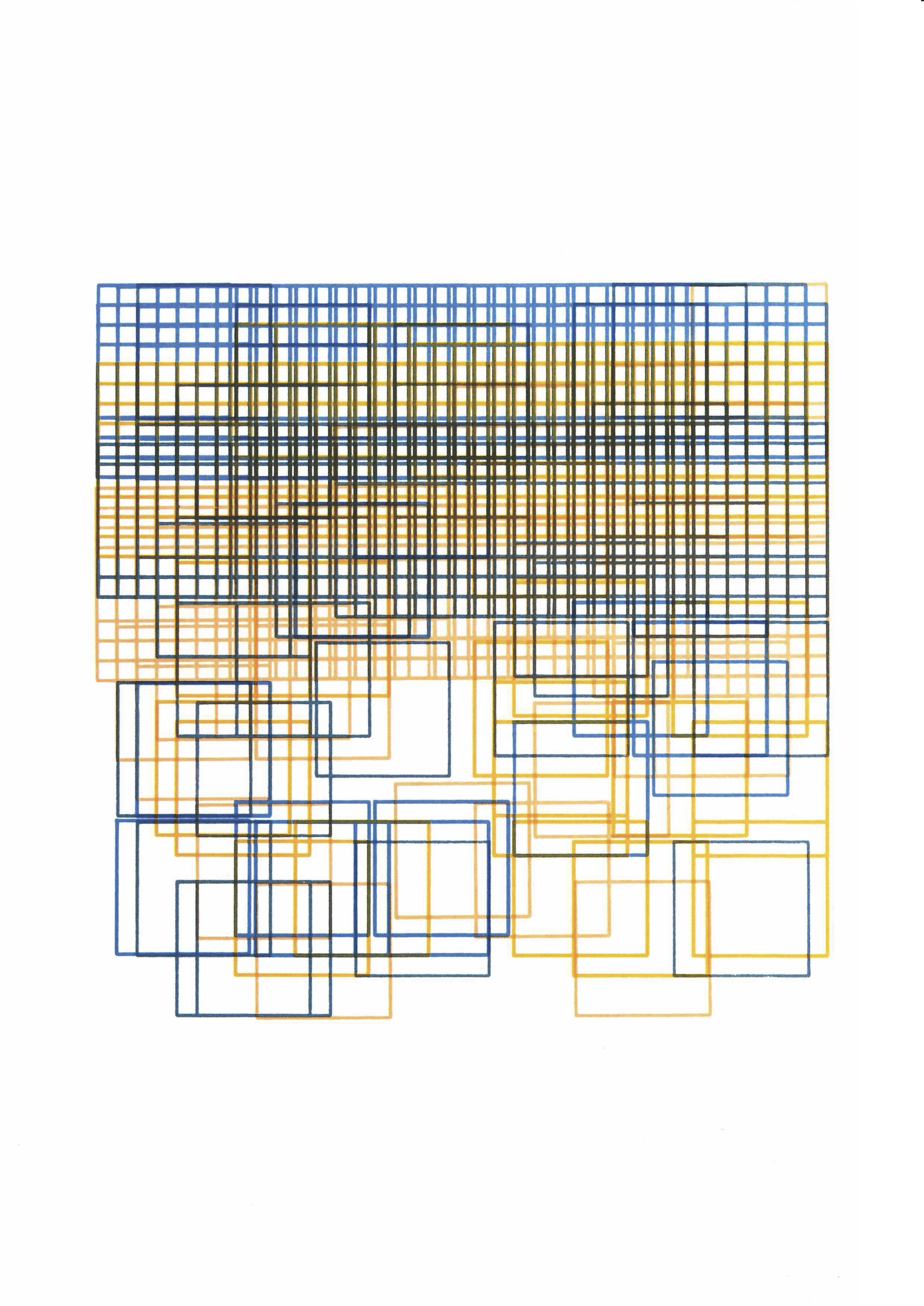
Frieder Nake - Walk-Through-Raster. Serie 7.3-1 (1966)Bildformat: 18 x 18 cmBlattformat: 21 x 29,7 cm (DIN A 4) Gedruckt auf 300 g Premiumpapier (FSC®-zertifiziert)
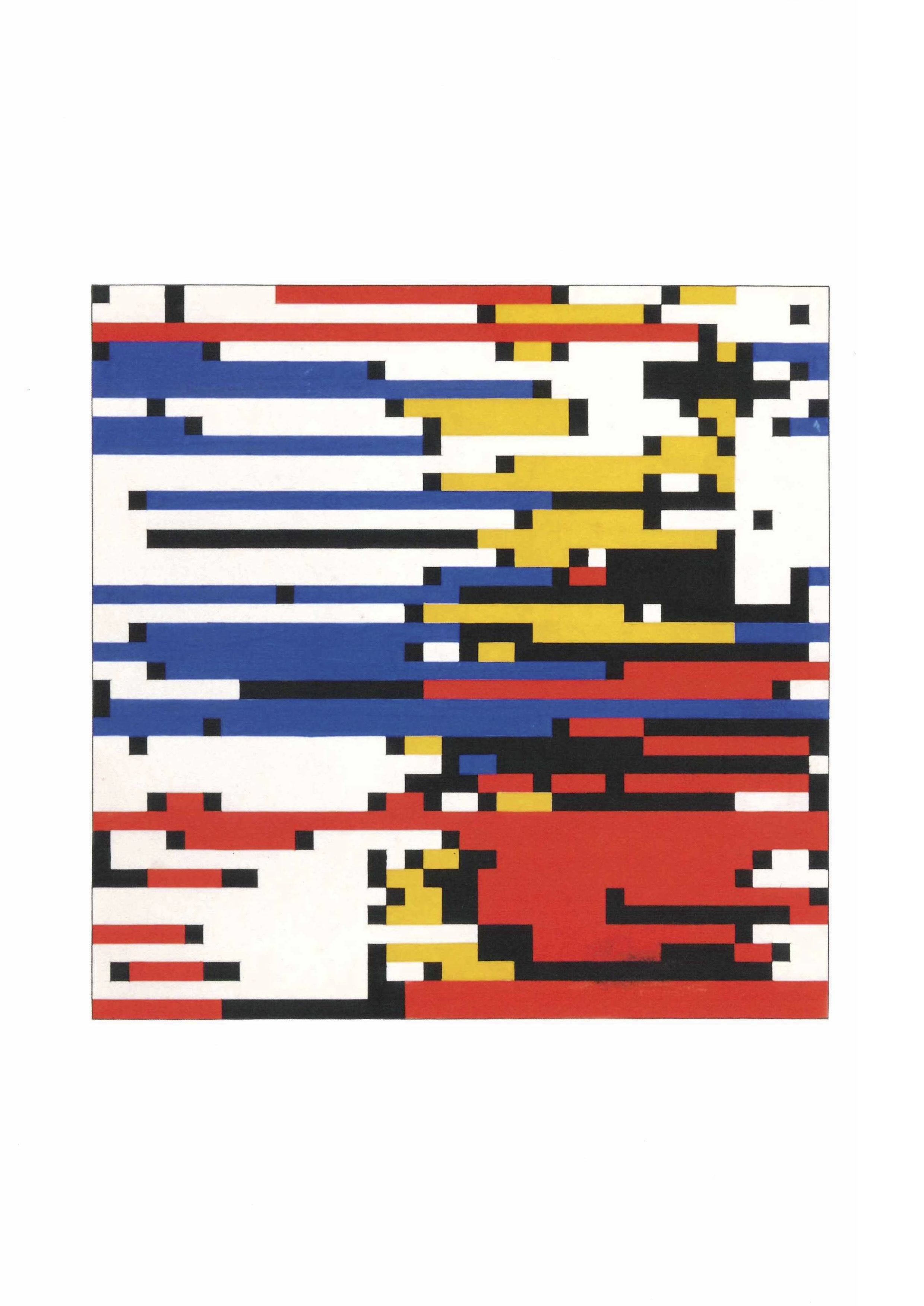
Hiroshi Kawano - Design 1の2 (1964) Bildformat: 17 x 17 cm Blattformat: 21 x 29,7 cm (DIN A 4) Gedruckt auf 300 g Premiumpapier (FSC®-zertifiziert)
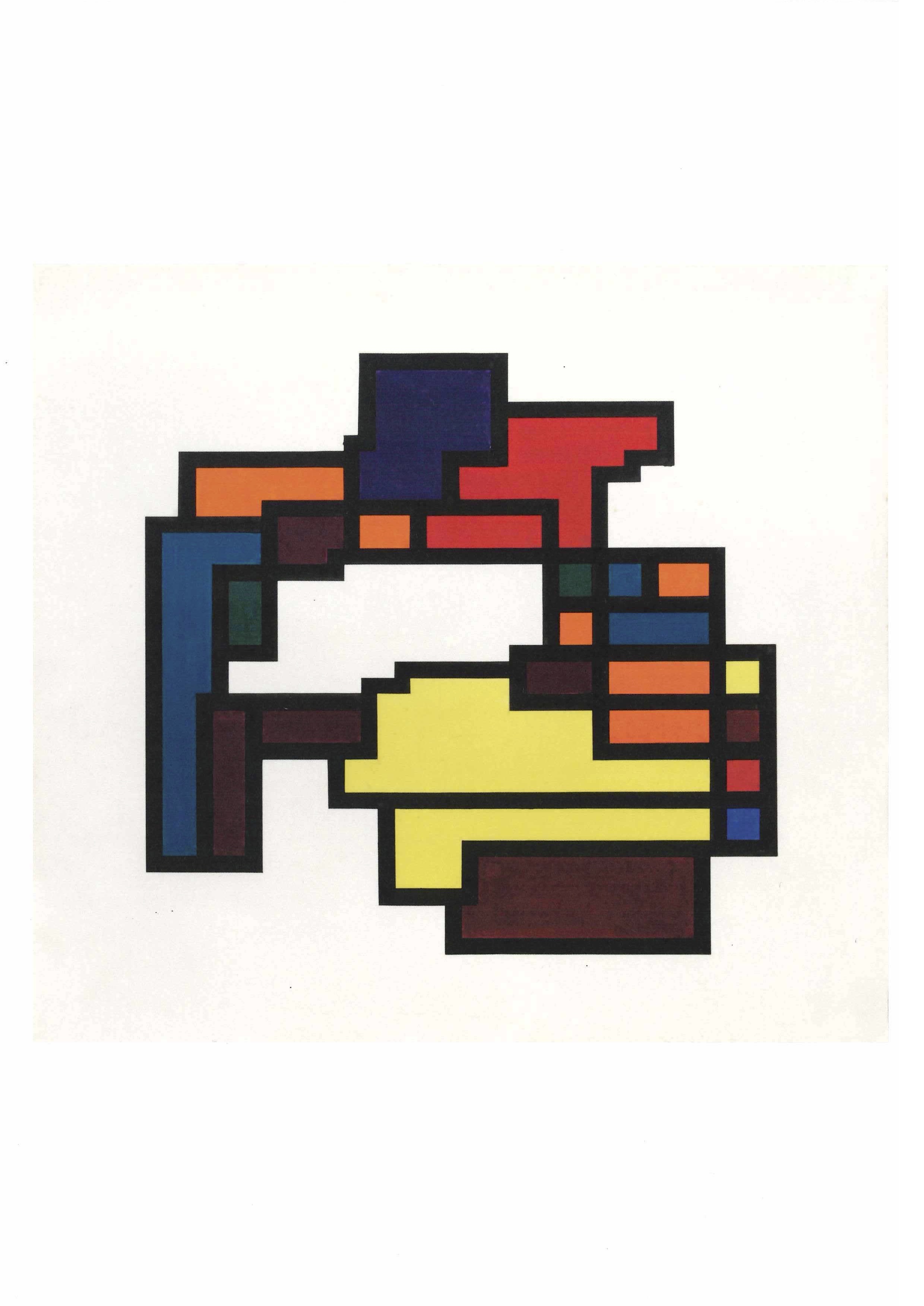
Hiroshi Kawano - KD 27, aus der Serie / from the series Artificial Mondrian (1969)Bildformat: 19,5 x 18 cm Blattformat: 21 x 29,7 cm (DIN A 4) Gedruckt auf 300 g Premiumpapier (FSC®-zertifiziert)
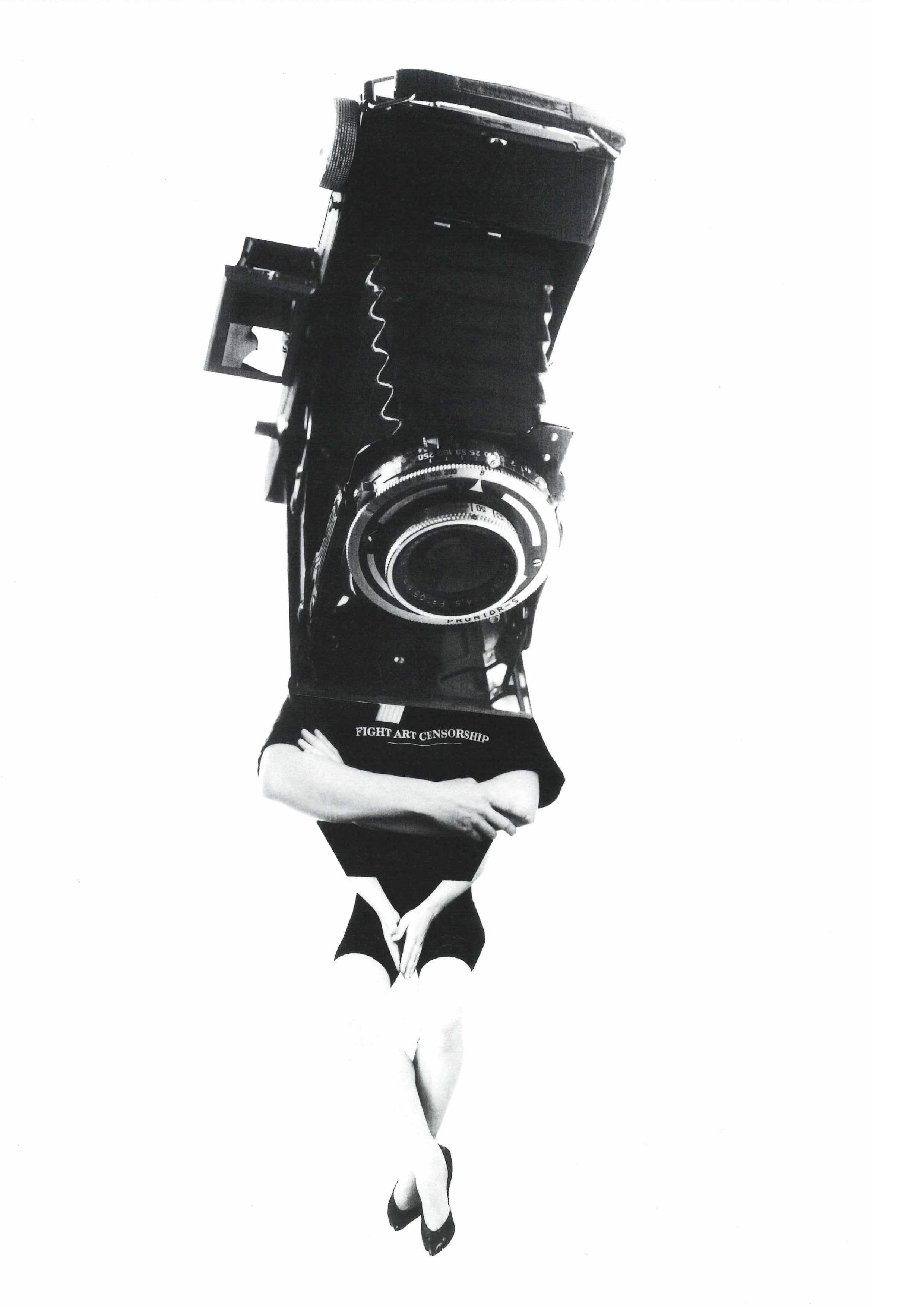
Lynn Hershman Leeson - Fight Art Censorshop, aus der Serie / from the series Phantom Limb (1986/2016)Bildformat: 12 x 28 cmBlattformat: 21 x 29,7 cm (DIN A 4) Gedruckt auf 300 g Premiumpapier (FSC®-zertifiziert)
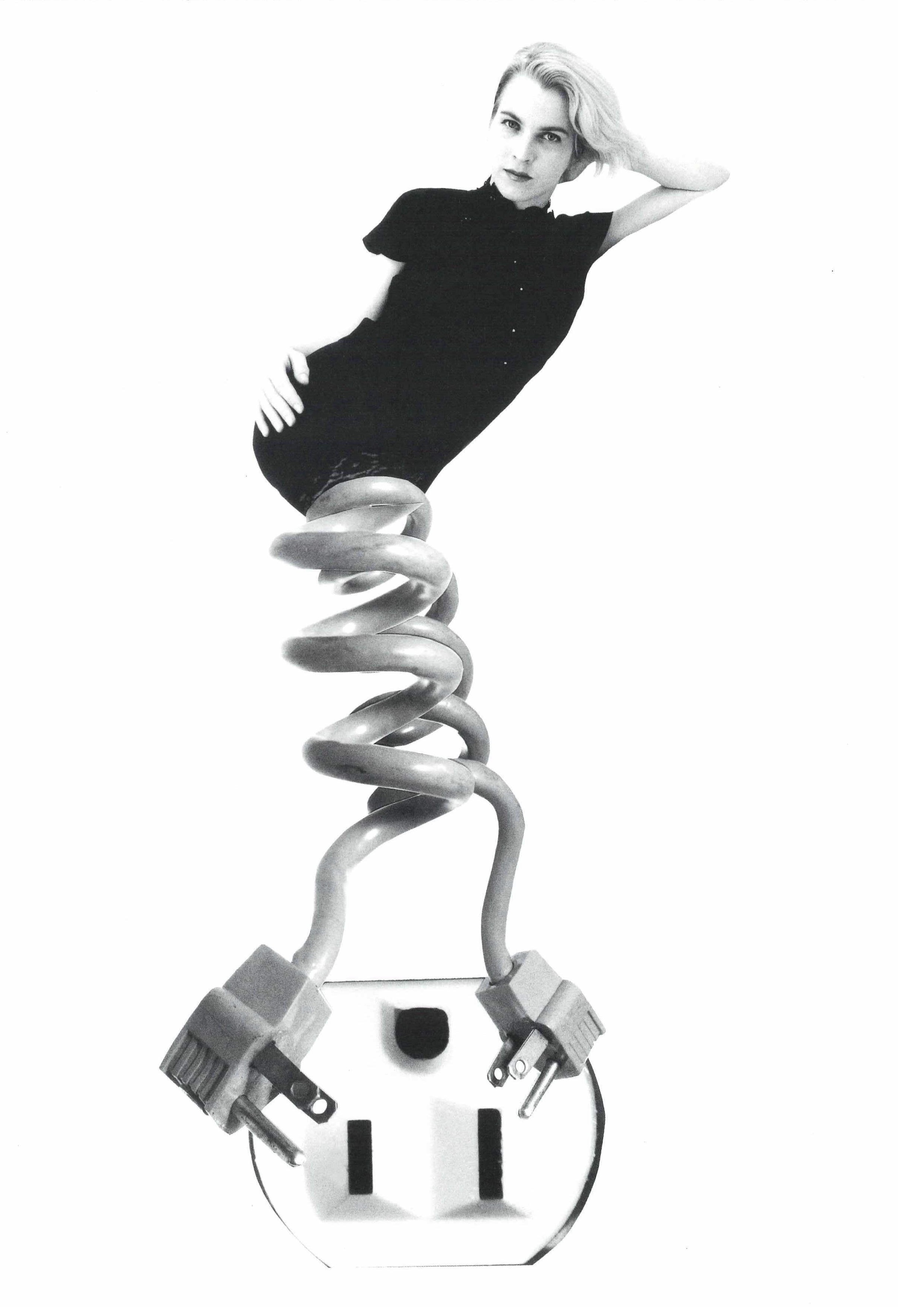
Lynn Hershman Leeson - Plugged, aus der Serie / from the series Phantom Limb (1986/2016)Bildformat: 21 x 29,7 cm Blattformat: 21 x 29,7 cm (DIN A 4) Gedruckt auf 300 g Premiumpapier (FSC®-zertifiziert)
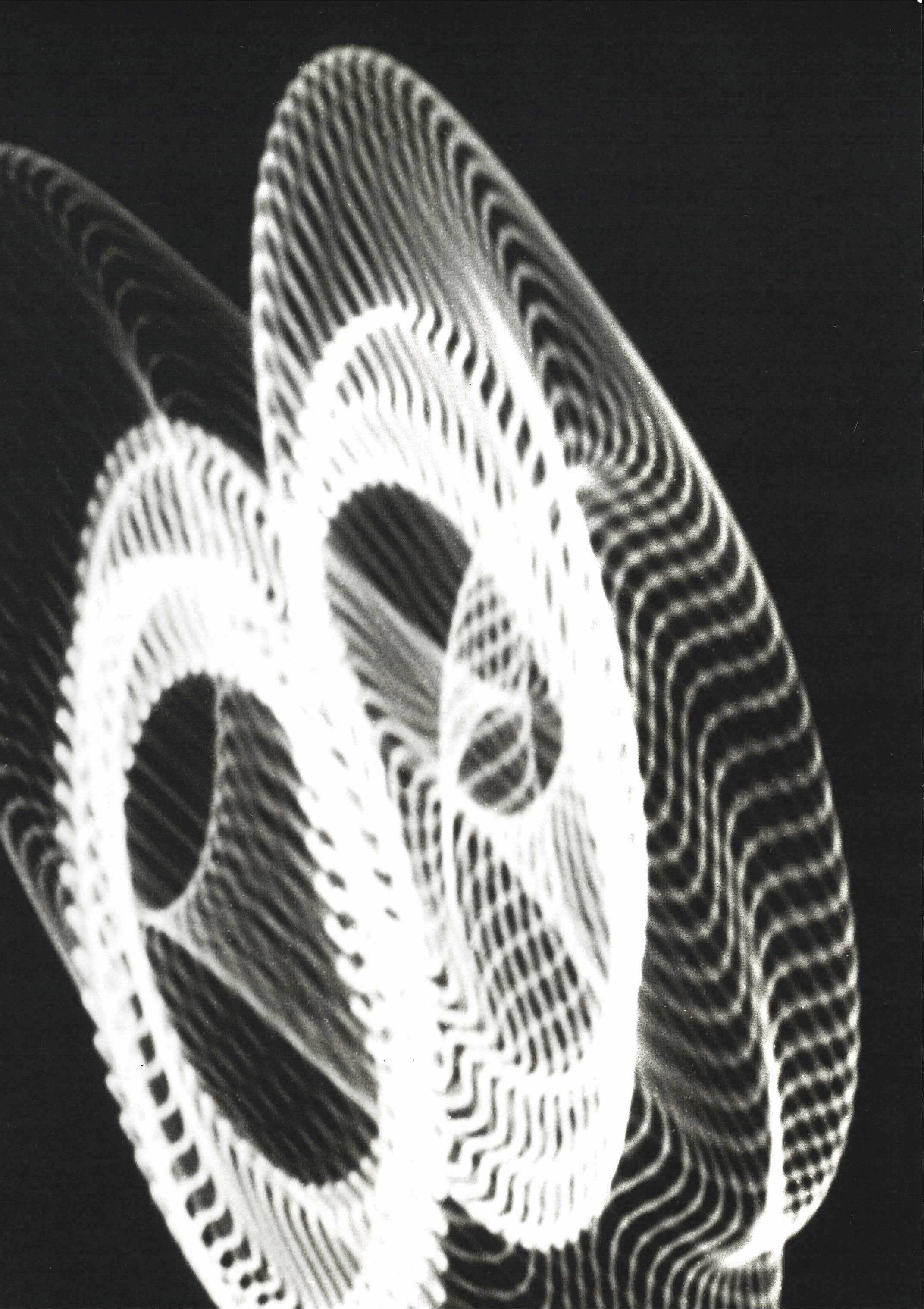
Herbert W. Franke - Tanz der Elektronen (1956) Bildformat: 21 x 29,7 cm Blattformat: 21 x 29,7 cm (DIN A 4) Gedruckt auf 300 g Premiumpapier (FSC®-zertifiziert)
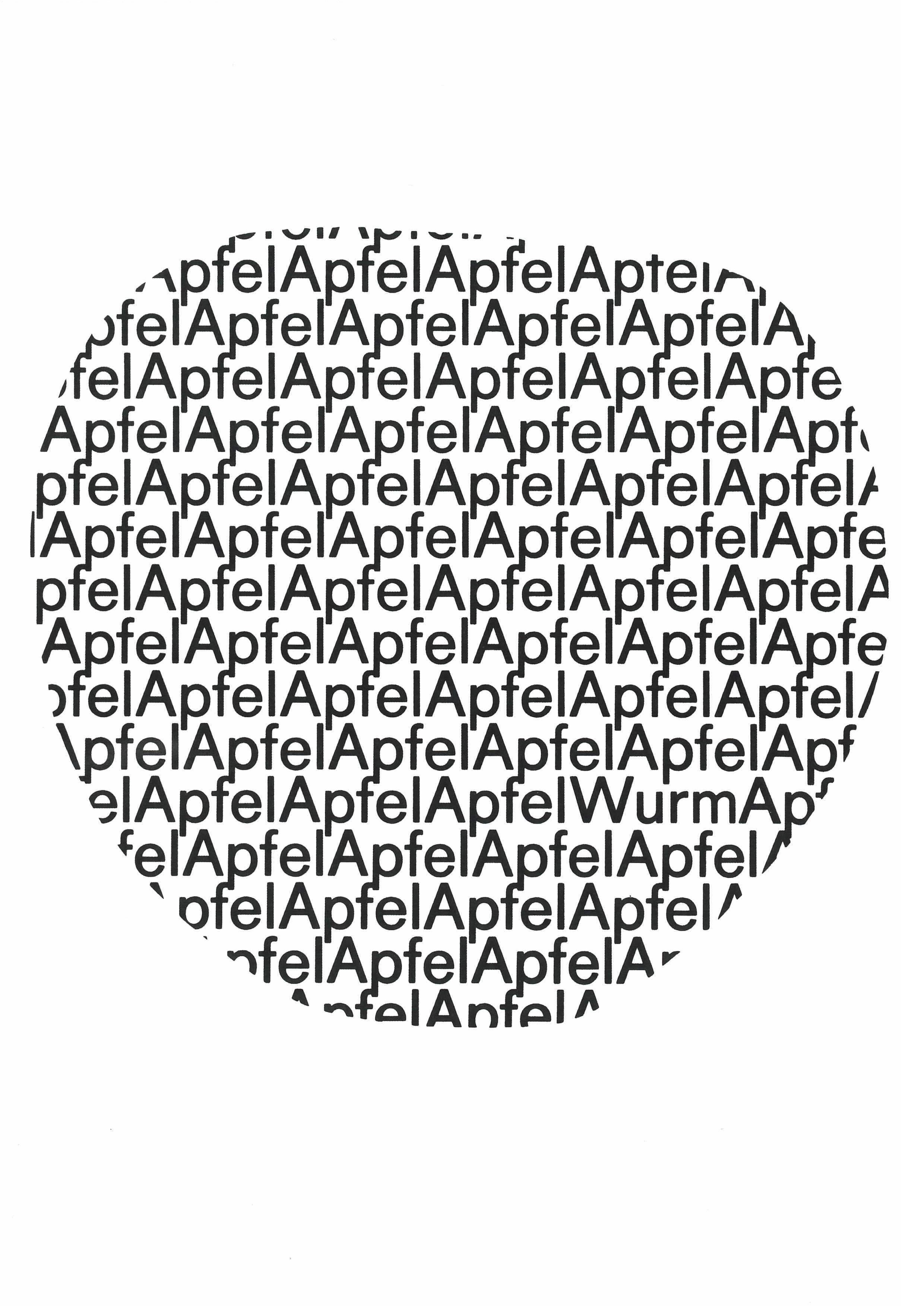
Reinhard Döhl - Apfel mit Wurm (1970) DruckgrafikBildformat: 20 x 18 cmBlattformat: 21 x 29,7 cm (DIN A 4) Gedruckt auf 300 g Premiumpapier (FSC®-zertifiziert)
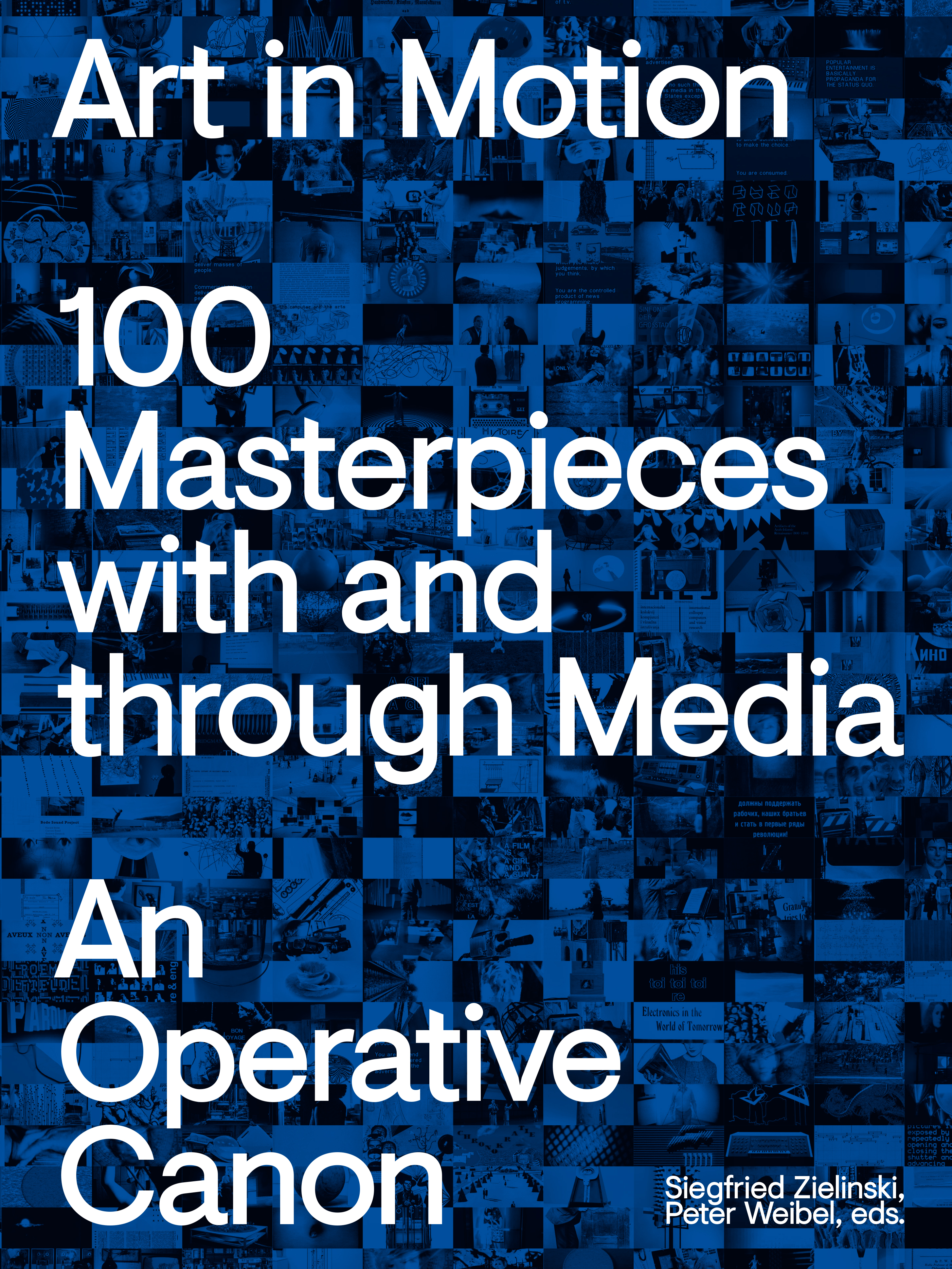
A journey through the history of media art: its aesthetic practices and forms of expression, its genres, styles and conceptual variants Explore the many facets of media art through a carefully curated selection of key works and in-depth classifications. This publication traces the fascinating evolution of media art—beginning with early photographic experiments, cinematography and sound art, advancing to innovative machine and projection theater, radio and television art, artistic video as well as media-based action and Fluxus art, all the way to the networked and collaborative art practices of the past two decades. As a comprehensive media art anthology, the publication not only presents an operative canon of media art history through 100 carefully selected masterpieces, but also reveals global references that bring to life the diverse interconnections of media experiments. A profound introductory essay by renowned media theorists Siegfried Zielinski and Peter Weibel offers readers valuable insights into this exciting field. Comprehensive overview of the development of media art– From historical beginnings to contemporary networked art formsExpert Introduction – Substantial essay by media theorists Siegfried Zielinski and Peter WeibelHigh-quality art book print with numerous large illustrations and a high-quality binding
This travel guide through the world of the Fellow Travellers offers a playful approach to the exhibition concept. Fellow Travellers shows projects in which art is understood as a process of changing the everyday. All projects were developed interlocally, i. e. on site with the people living there. This is the only way for art to emerge from its traditional representation into genuine future action. The individualization of technological progress helps here. Digital media have long been locally distributed and accessible worldwide. The book is the first in a series of publications that will accompany our Fellow Travellers exhibition project throughout its duration (2024–26). Each volume will be dedicated to a specific theme that reflects our exhibition format. The content of each volume is intended to inform, to inspire, to question old thought patterns, and to encourage action. This first volume of the series is an introduction to the first part of Fellow Travellers, which has been on show at the ZKM since September 2024. An introductory essay explains the intention and focus of the exhibition, while an extensive work section presents its various segments and projects. The “Fellow Travellers ABC” introduces you in a playful way to the terms that are relevant to us for this project and outlines connections in our thinking that we would like to share with you. The ABC is a tool for understanding our curatorial approach. practical formatgenerously illustratedcompact informationpublication series: Fellow Travellers. Art as a Tool to Change the World
Dieser Reiseführer durch die Welt der Fellow Travellers bietet spielerisch einen Zugang zum Ausstellungskonzept. Fellow Travellers zeigt Projekte, bei denen Kunst als Prozess der Veränderung des Alltäglichen verstanden wird. Alle Projekte wurden interlokal, also vor Ort mit den dort lebenden Menschen, entwickelt. Denn nur so kommt die Kunst aus ihrer traditionellen Repräsentation heraus in ein echtes Zukunftshandeln. Dabei hilft die Individualisierung des technologischen Fortschritts. Digitale Medien sind längst weltweit lokal verbreitet und zugänglich. Dieses Buch ist der erste Band einer Reihe von Publikationen, die zu unserem Ausstellungsprojekt Fellow Travellers (2024–26) erscheinen wird. Jeder Band wird sich einem besonderen Thema widmen, das unser Ausstellungsformat widerspiegelt. Die Inhalte der einzelnen Bände sollen informieren, alte Denkmuster infrage stellen und auch zum Handeln ermutigen. Dieser erste Band der Serie ist eine Einführung in den ersten Teil von Fellow Travellers, der seit Ende September 2024 im ZKM zu sehen ist. Ein einleitender Essay erläutert die Hintergründe und Intentionen der Ausstellung, ein umfangreicher Werkteil stellt die unterschiedlichen Sektionen und Projekte vor. Das „Fellow Travellers ABC“ erklärt spielerisch die Begriffe, die uns für diese Ausstellungsreihe wichtig sind, und skizziert Verbindungen unseres Denkens, die wir gerne mit Ihnen teilen möchten. Das ABC ist ein Werkzeug zum Verständnis unseres kuratorischen Ansatzes. handliches Formatgroßzügig bebildertkompakte InformationPublikationsreihe: Fellow Travellers. Kunst als Werkzeug, die Welt zu verändern
Das ZKM ist vieles – ob Museum, Labor, Hackerspace oder Raum für offene Debatten. Wer es besucht, nimmt starke Eindrücke mit nach Hause. Dieses Coffee Table Book fängt das Erlebnis ZKM in starken Fotografien ein und zeigt die Vielfalt an Begegnungen, die im historischen Hallenbau möglich sind. Ein visuelles Erlebnis für alle, die die Faszination ZKM noch länger auf sich wirken lassen möchten.
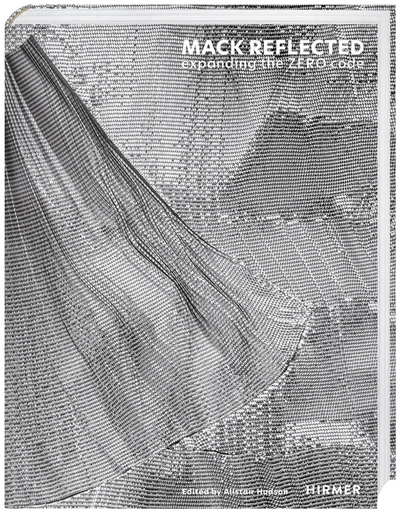
A particular quality of Heinz Mack’s art is ist relevance regarding questions of our time. By means of works from all creative periods the book examines Mack’s relationship to technology, science and nature and offers exciting approaches, for example with regard to the present-day challenges of the transformation of technology or the climate catastrophe. Heinz Mack was always far ahead of his time: His reflector walls and plantations of lamellae devised 65 years ago anticipate present-day photovoltaic installations. His study of air, water, light and sand helps to reflect the acute threat to natural resources. While the artist saw desert landscapes as empty, free spaces for his Land Art, today the Arctic and the Sahara symbolize climate change and the destruction of nature. This multi-faceted, far-seeing publication shows Heinz Mack as an artist of the 21st century.--- Eine besondere Qualität von Heinz Macks Kunst ist ihre Relevanz für Fragen unserer Zeit. Anhand von Werken aus allen Schaffensphasen beschäftigt sich das Buch mit Macks Beziehungen zu Technologie, Wissenschaft und Natur und bietet spannende Denkansätze etwa im Hinblick auf die heutigen Herausforderungen des Technikwandels oder der Klimakatastrophe. Heinz Mack war seiner Zeit schon immer weit voraus: Seine vor 65 Jahren konzipierten Reflektorwände und Lamellen-Plantagen nehmen gegenwärtige Photovoltaik-Anlagen vorweg. Seine Auseinandersetzung mit Luft, Wasser, Licht und Sand hilft, die akute Bedrohung natürlicher Ressourcen zu reflektieren. Empfand der Künstler die Wüstenlandschaften noch als leeren, freien Raum für seine Landart, symbolisieren Arktis und Sahara heute den Klimawandel und die Zerstörung der Natur. Facettenreich und mit weitem Blick zeigt der Band Heinz Mack als einen Künstler des 21. Jahrhunderts.
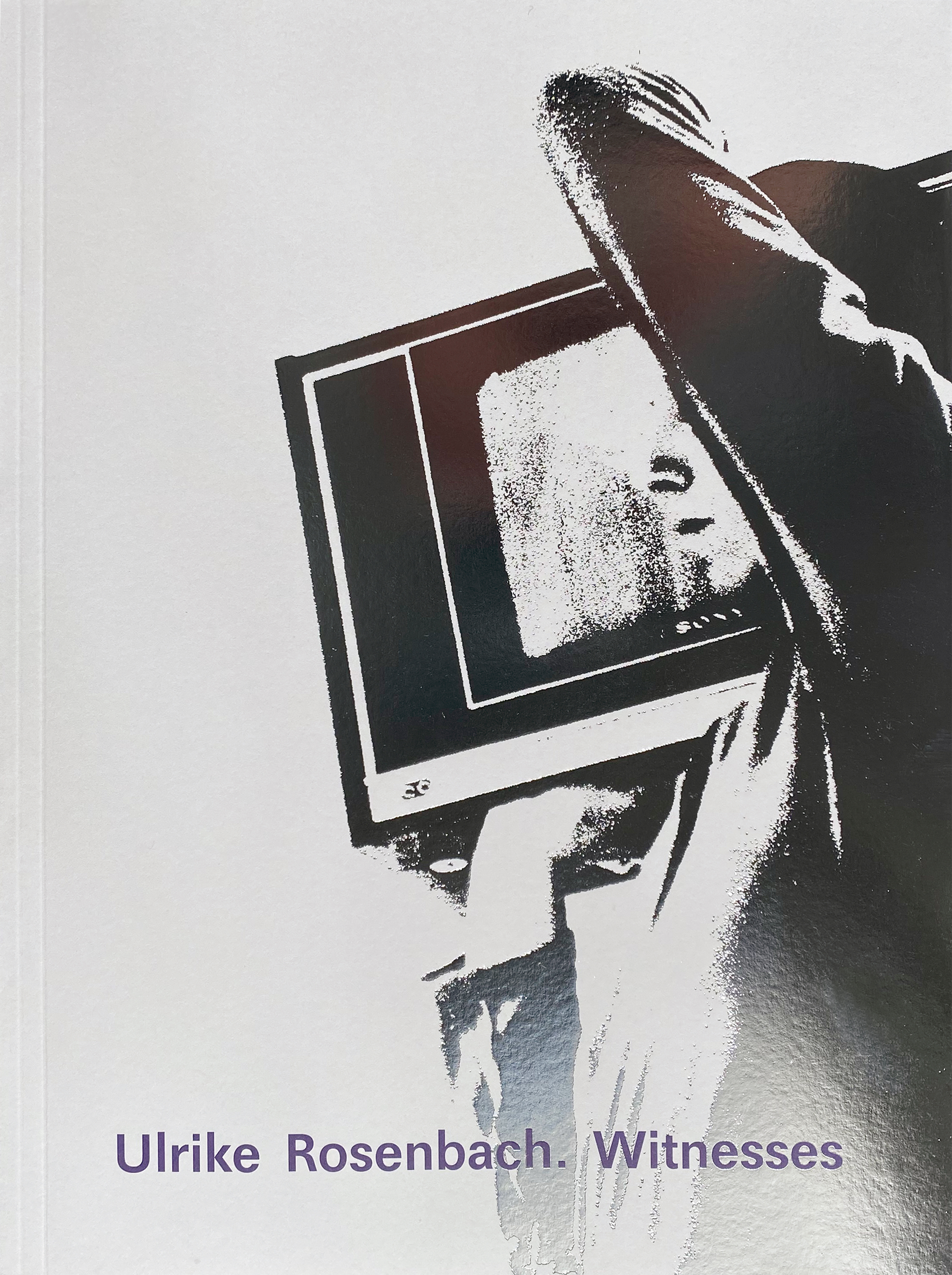
Ulrike Rosenbach’s expansive oeuvre is synonymous with the history of performance and video art. From the 1970s onwards, she focused on the female body as an interface between nature, culture, and technology, pioneering (eco)feminist performance practice and applying newly available recording and playback technologies in her work. Within and between different works, she created a continuous feedback loop between performance as a live event and liveness as a recorded event, from which new installations and video works would often emerge. The history of performance has often been narrated as the immediate and temporal experience of an event with the spectator as a witness. Rosenbach, and by extension this monograph, departs from the notion of the “witness” as a documentarian of the live performance to include research on how the various media the artist works in—performance, video, sculpture, installation, photography, drawing—relate to, channel, and act as material witnesses to her performance practice. An intergenerational and international group of scholars, writers, artists, curators and critics scrutinize this question of being a witness, while highlighting the throughlines in Rosenbach’s five-decades-long practice. High-quality art book printNumerous work illustrationsText contributions by an international group of scholars, writers, artists, curators and critics
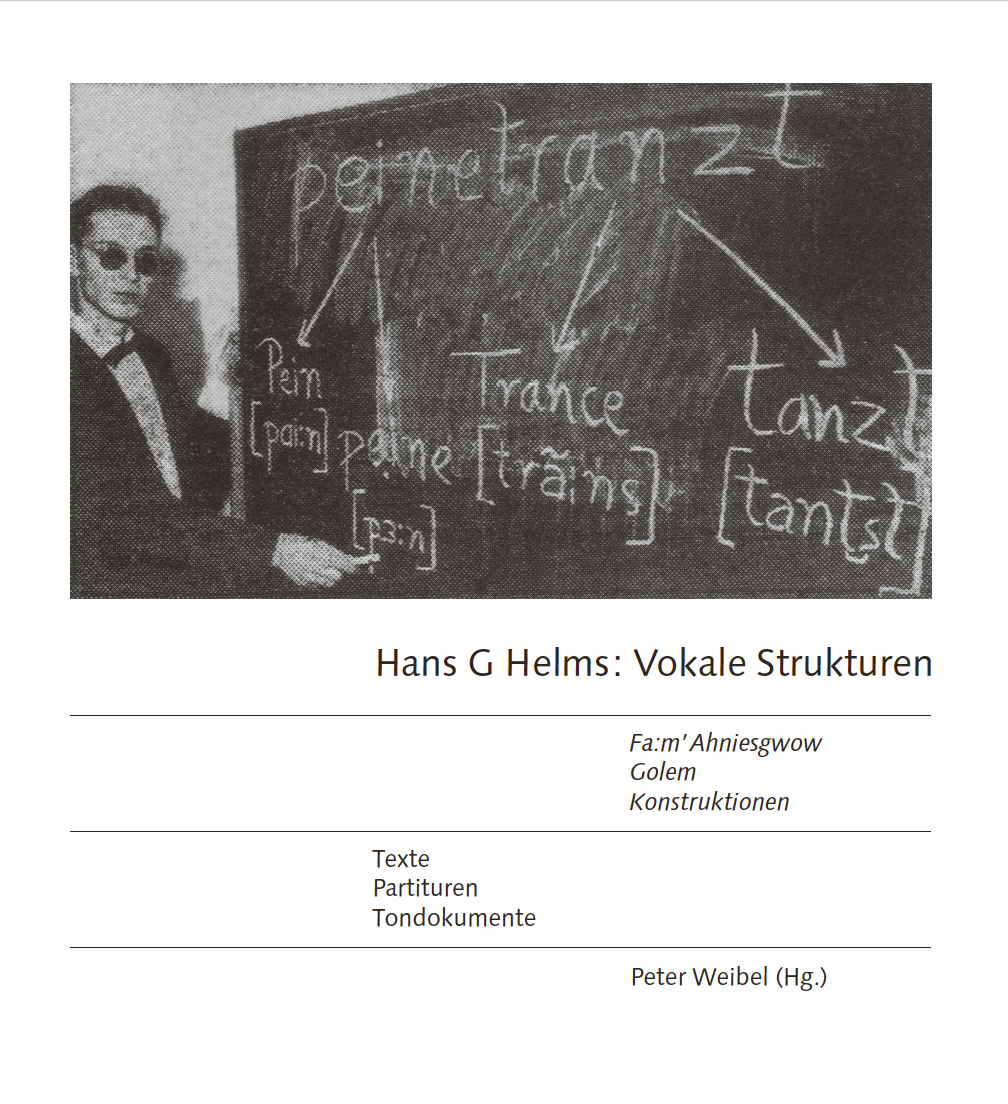
Fa:m’ Ahniesgwow, Golem, Konstruktionen. Texte, Partituren, TondokumenteHans G Helms (1932–2012) war ein deutscher Komponist, Schriftsteller und Journalist, der sich mit musikkritischen, ideologischen, sozial- und wirtschaftsgeschichtlichen Themen auseinandersetzte. Zwischen 1959 und 1968 hat er drei Sprachkunstwerke geschaffen, die zu den fortschrittlichsten ihrer Gattung gehören: Fa:m’ Ahniesgwow, Golem und Konstruktionen erweitern in unterschiedlicher Intensität die phonetischen, semantischen und syntaktischen Felder der Sprache. Sie bewegen sich in einem »Niemandsland zwischen den Sprachgrenzen« (Helms), und bilden vielstimmige Konstruktionen aus fremden Sprachen und Sprachverfremdungen. Dieser Band dokumentiert, kommentiert und kontextualisiert Helms’ vokale Konstruktionen auf umfassende Weise: Texte von Theodor W. Adorno, Gottfried Michael Koenig, Karl Heinz Roth, Peter Weibel und ein Gespräch zwischen Helms, Helmut Heißenbüttel und Klaus Schöning beschäftigen sich mit Helms’ Schaffen im Umfeld der Kölner Avantgarde-Szene mit den Fixpunkten Atelier Bauermeister, Westdeutscher Rundfunk und Café Campi. Die beiden CDs in diesem Buch geben Helms’ Sprachkompositionen in zum Teil historischen Aufnahmen wieder. Darüber hinaus sind die Originalpartituren und das seltene Buch Fa:m’ Ahniesgwow in Faksimiles über Downloads zugänglich. Standardwerk zu Hans G Helms unzugängliche Originalpartituren und vergriffene Originalpublikation als pdf zum Download Tonaufnahmen der drei Werke (Fa:m’ Ahniesgwow, Golem, Konstruktionen) auf CDs Helms war ein Ausnahmetalent, in vielen Sparten aktiv: Lautpoet, Sprachkomponist, Journalist, Musikkritiker, Sozialkritiker, Rundfunkredakteur
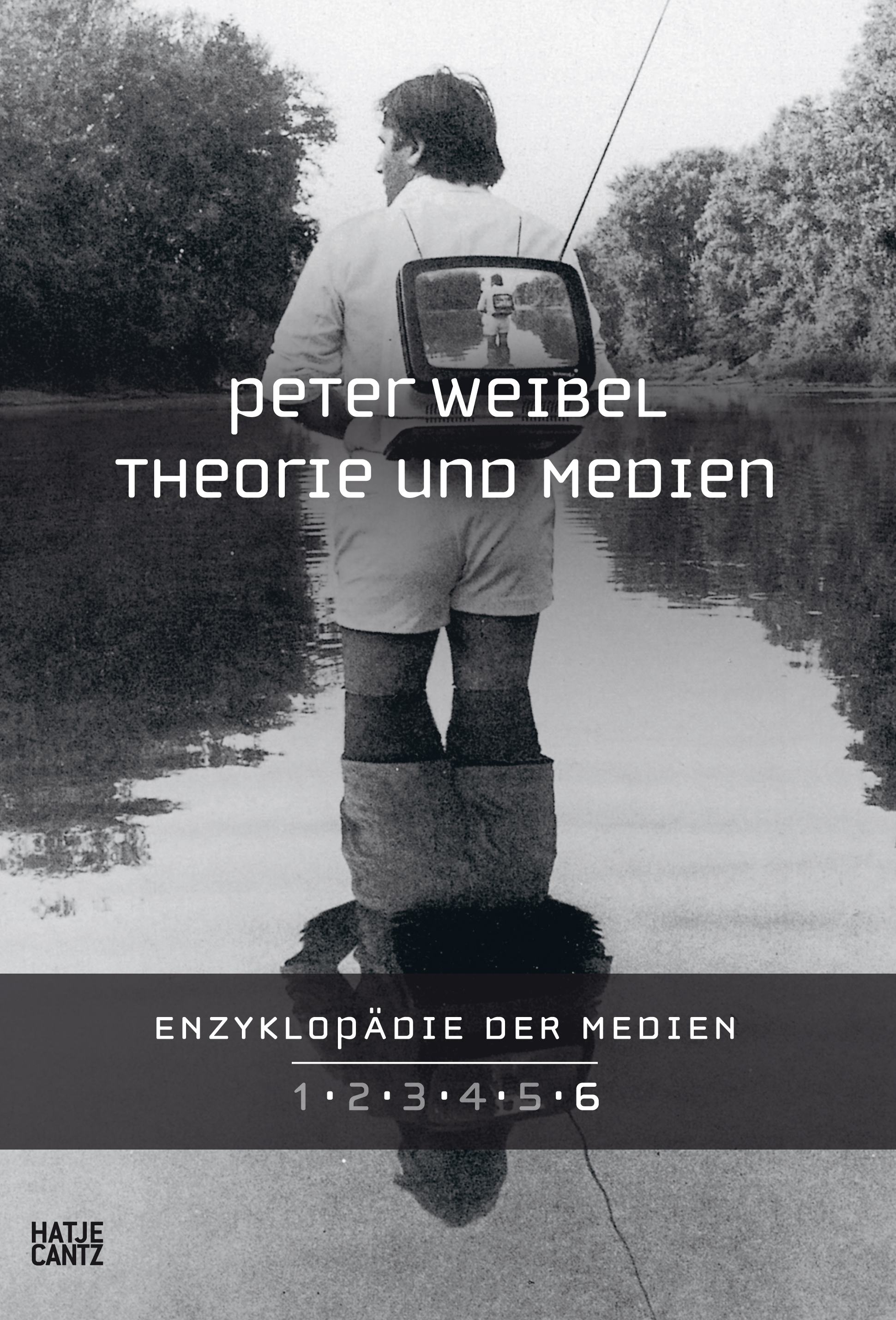
Peter Weibel geht der Frage nach, wie die Medien(-künste) die Welt und unsere Wahrnehmung konstituieren, simulieren und verändern.In seinen wegweisenden medien- und kunsttheoretischen Texten geht der 2023 verstorbene Künstler, Kurator und Theoretiker Peter Weibel der Frage nach, wie die Medien(-künste) die Welt und unsere Wahrnehmung konstituieren, simulieren und verändern. Ausgehend von systemtheoretischen Überlegungen skizziert er die Medienkünste als Ort der Reflexion unseres Zugangs zur Welt. Seine Essays liefern Werkzeuge zur Analyse virtueller Welten und Bilder bis hin zur Kunst im Zeitalter künstlicher Intelligenz. Weibel zeichnet darüber hinaus die Allianz von Kunst und Wissenschaft nach und zeigt, wie daraus neue Wissenssysteme entstehen. So finden sich in dem vorliegenden Band grundlegende Texte zur künstlerischen Forschung, zur Transzendierung des Menschen im Sinne eines Transhumanismus, zur »Exo-Evolution«, der »Elektrosphäre« und der »Infosphäre« sowie einer »Renaissance 3.0«. Kunsttheoretisch hat Peter Weibel mit dem Begriff »Kontextkunst« die soziale Konstruktion von Kunst beschrieben. Seine Theorie der multiplen Modernen zeigt, wie die Repräsentation nicht nur von der Abstraktion abgelöst wurde, sondern auch durch reale Handlungen und reale Gegenstände sowie durch eine neue Werkzeugkultur, eine Verabsolutierung der Elemente der Malerei und der Materialmalerei. Weibels teils prophetische Texte offenbaren die gesellschaftliche Relevanz von Medienkunst und ihr epistemisches Potenzial. Der Kunst und ihren Institutionen kommt demnach auch eine Bildungsaufgabe zu, die einen emanzipierten Umgang mit der Digitalisierung im 21. Jahrhundert ermöglicht. Sechster und letzter Band der gesammelten Schriften des 2023 verstorbenen Künstlers, Theoretikers und langjährigen Direktors des ZKM | Karlsruhe Peter WeibelPeter Weibel war zentraler Akteur der europäischen MedienkunstAktuelle Diskurse wie Transhumanismus, Kunst mit AI und Algorithmen, Alternativen zu klassischen Konzepten des Ausstellens und eine neue WerkzeugkulturWegweisende historische Texte zu „Kontext-Kunst“, Medienkunst, Moderne, Kunst und Wissenschaft
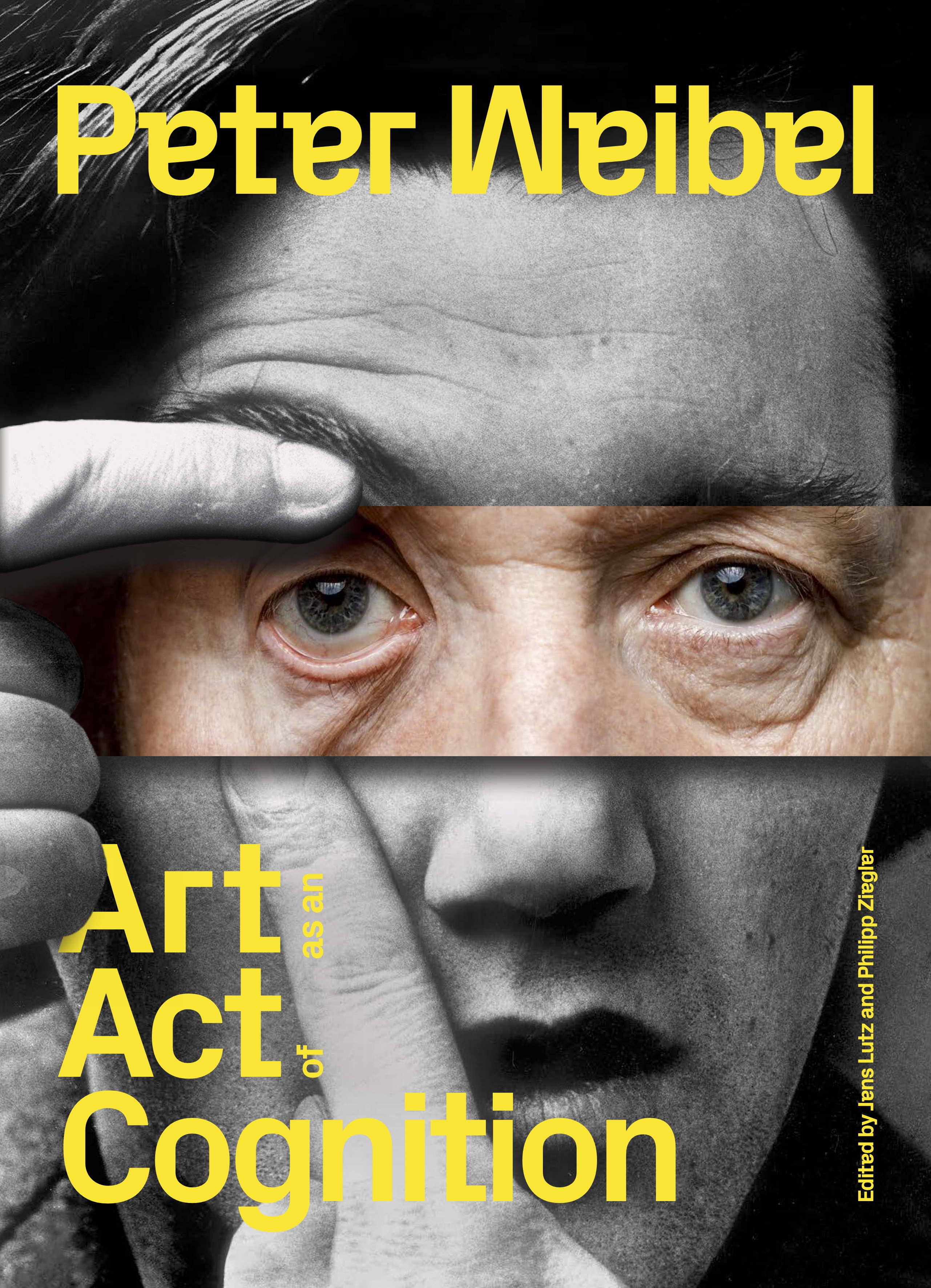
Seit den 1960er-Jahren war Peter Weibel als Nomade zwischen Kunst und Wissenschaft unterwegs. Nun erscheint mit Peter Weibel: Art as an Act of Cognition die erste umfassende Werkschau des Ausnahmekünstlers in englischer Sprache.In seinem mannigfaltigen Werk hat der Künstler und Theoretiker Peter Weibel (1944–2023) seit den 1960er-Jahren zentrale Entwicklungen in der Kunst der 20. und 21. Jahrhunderts antizipiert. Mit experimenteller Lyrik, Video- und Filmarbeiten, Fotografie und Aktionskunst bis hin zu skulpturalen und installativen Werken hat er die Kunstwelt nachhaltig geprägt. Unter Einbezug des Publikums verschob Weibel den Fokus von der bildlichen Repräsentation zur Konstruktion der Realität. Die Kunst bildet die Welt nicht ab, sie erschafft sie erst: Art as an Act of Cognition.erste umfassende englischsprachige Monographie zu Peter Weibel, die einen Überblick über 450 Werke und 60 Jahre künstlerische Praxis bietetZahlreiche Illustrationen und Textbeiträge des Künstlers und seiner Weggefährten kontextualisieren das mannigfaltige Werkeingebettete Videos – Originalwerke und Kommentare des Künstlers selbst – können per QR-Code aufgerufen werden. Since the 1960s, Peter Weibel has been a nomad between art and science. Peter Weibel: Art as an Act of Cognition is the first comprehensive anthology of the exceptional artist’s work in English. In his diverse oeuvre, the artist and theorist Peter Weibel (1944–2023) has anticipated central developments in 20th and 21st century art since the 1960s. With experimental poetry, video and film works, photography and performance art to sculptural and installation works, he has left a lasting mark on the art world. By emancipating the audience, Weibel shifted the focus from visual representation to the construction of reality. Art does not depict the world, it creates it: Art as an Act of Cognition. First comprehensive English-language monograph on Peter Weibel, offering an overview of 450 works and 60 years of artistic practiceNumerous illustrations and text contributions by the artist and his companions contextualize the diverse oeuvre35 videos – original works and commentaries by the artist himself – can be accessed via QR code.
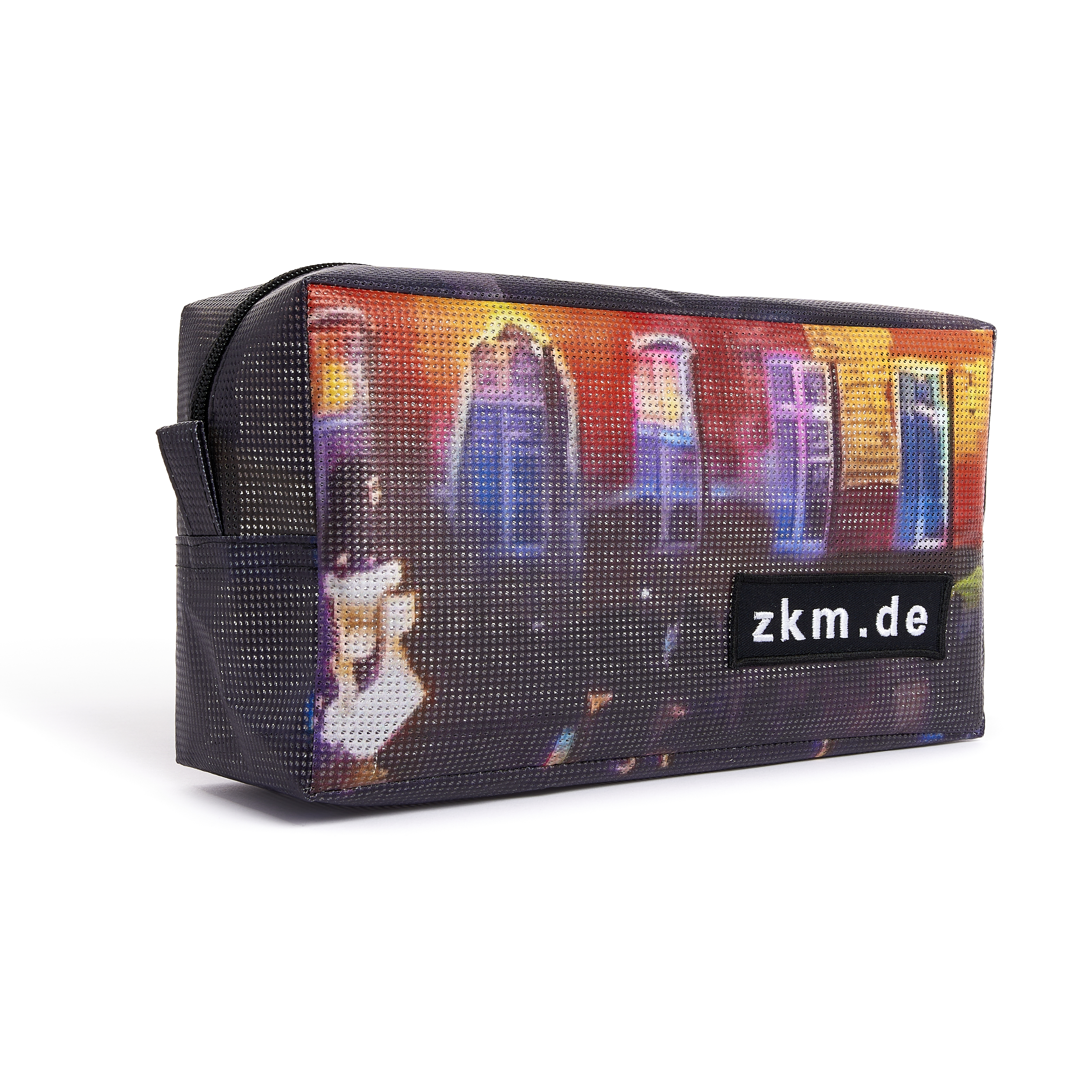
Klein, markant, immer ein EinzelstückFür Kosmetik, Kabel oder Alltagsessentials. Robust, wasserabweisend und als Unikat mit eigener visueller Geschichte.Maße:23 (L) x 8,5 (B) x 13,5 (H) cm
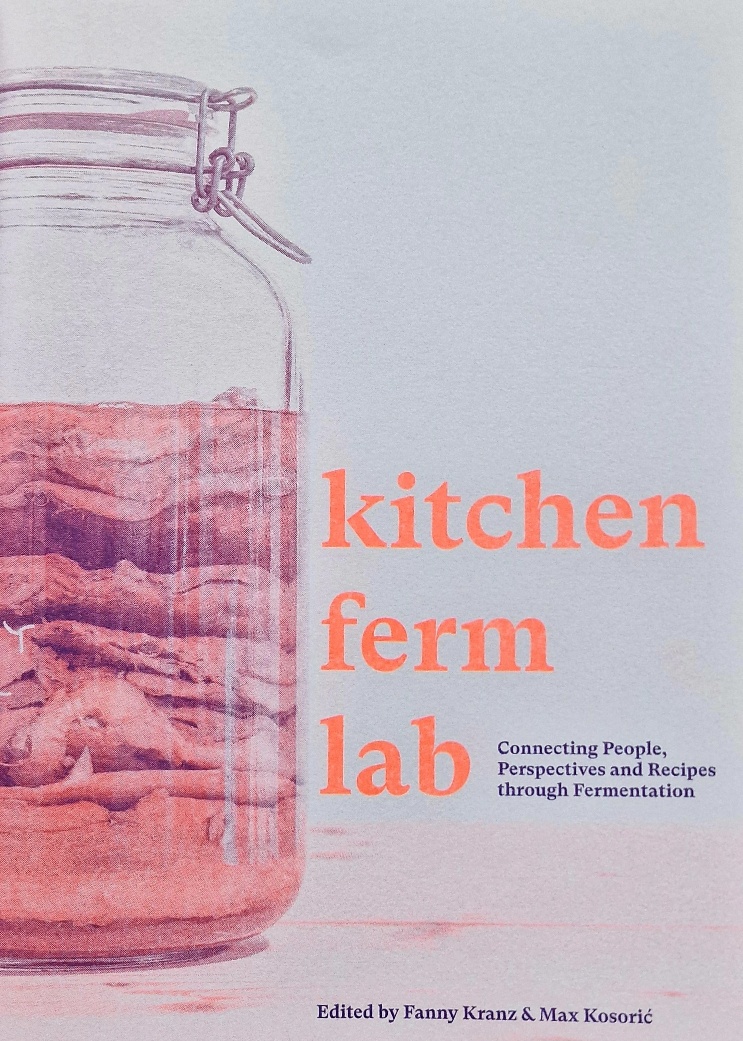
Seit 2020 fermentieren die beiden Kunstvermittler:innen und Designer:innen Fanny Kranz und Max Kosoric zusammen mit vielen verschiedenen Teilnehmer:innen im ZKM und präsentieren ihr gesammeltes Wissen in Form von Essays, Interviews, Rezepten, Fotografien und Zeichnungen in ihrem frisch gedruckten Riso-Katalog. In der Publikation „Kitchen Ferm Lab“ wurden Künstler*innen, Köch*innen, Kurator*innen, Kunstvermittler*innen und Mikrobiolog*innen eingeladen, ihr Wissen zu teilen, verbunden mit einer Auswahl von acht Rezepten (Pink Kimchi, Kombucha, Salzzitronen, Wilde Hefe, Koji, Miso, Tempeh, Bokashi) zum Nachkochen und Fermentieren in den heimischen Küchen und Gärten und einer fotografischen Dokumentation der ersten hybriden Kitchen_Ferm_Lab Workshops im ZKM.

Groß denken. Groß entspannenSchwarze Premium-Fleece-Decke mit Logo. Komfort in Statement-Größe für Sofa, Balkon oder Open-Air-Events.Eigenschaften:XXL-Format (140 x 200 cm)Weiches Premium-Fleece Schwarz mit Logo-Print
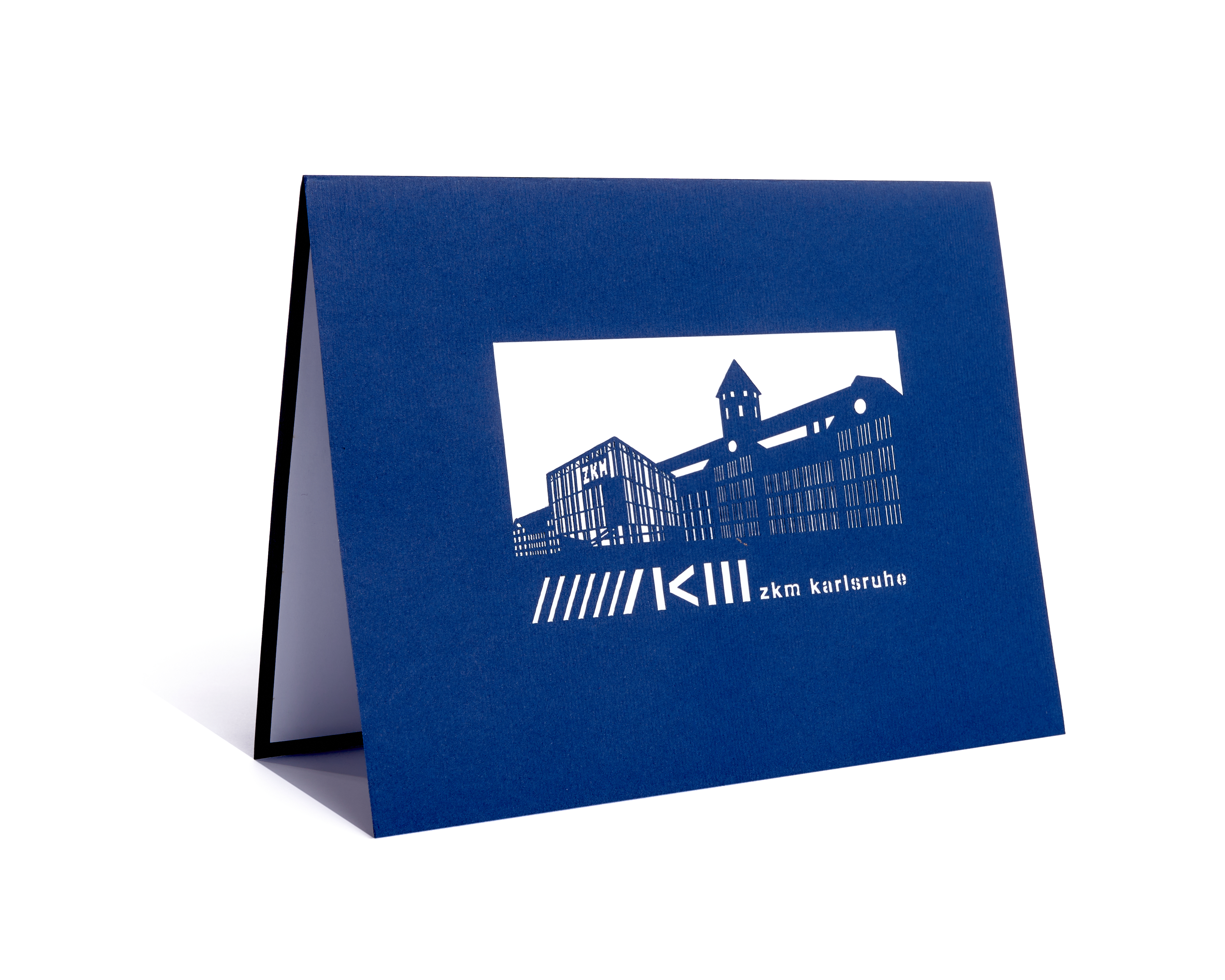
Kunstvoll gestaltete 3D-Karte mit Umschlag, 20 x 15 cm
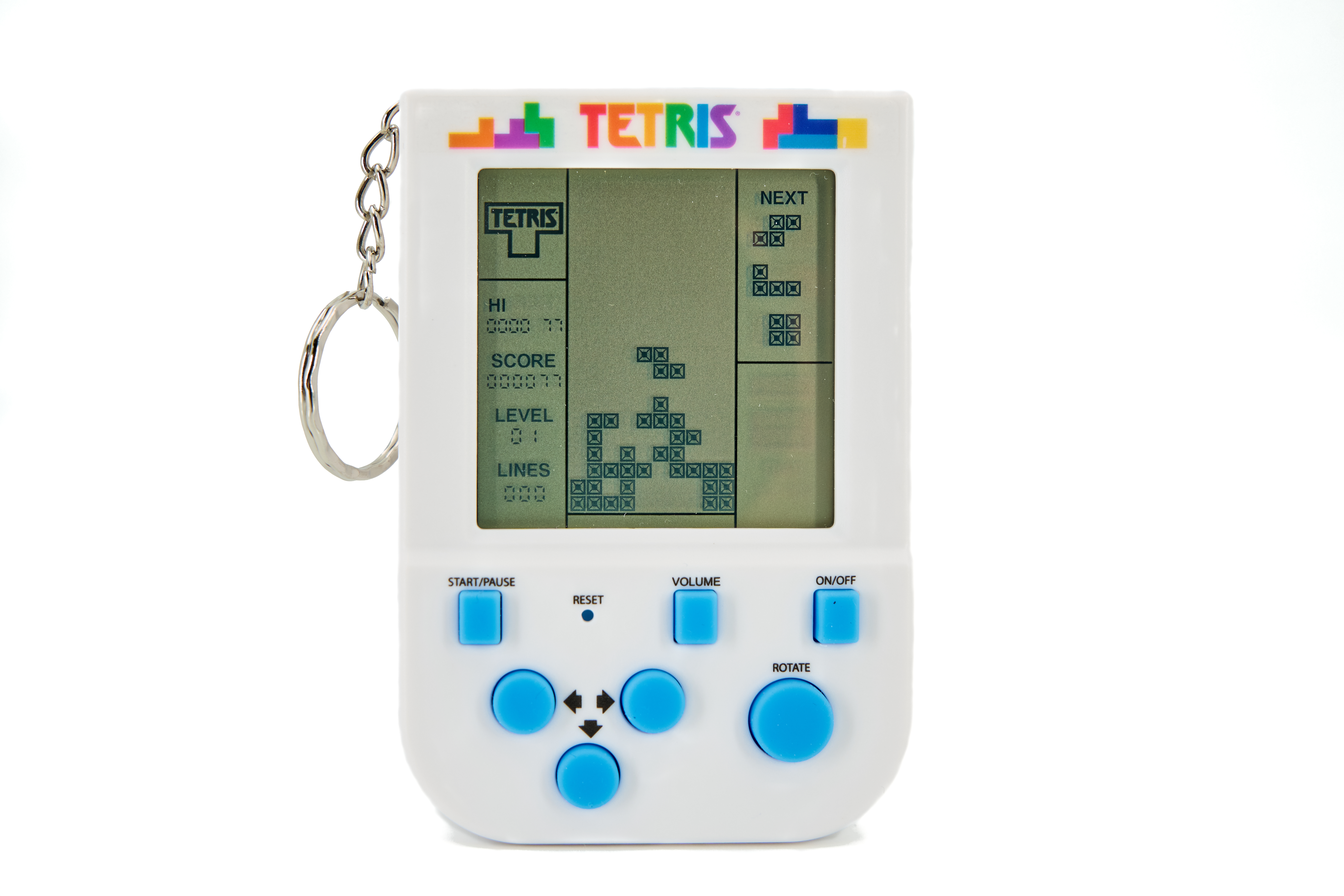
Retro-Gaming on-the go Klein, kompakt, aber nicht weniger unterhaltsam: Dieser Schlüsselanhänger ist nicht nur ein Accessoire, sondern auch ein voll funktionsfähiges Tetris-Spiel mit authentischen Original-Sounds und dem offiziellen Spielablauf. Der schwarze & weiße Bildschirm versetzt dich direkt zurück in die goldenen Zeiten der Arcade-Spiele. Zwei Spielmodi: Marathon (der traditionelle Spielverlauf mit 15 Levels) oder Sprint (wie schnell kannst du 25 Linien abräumen?) – los geht’s: level up your keychain!
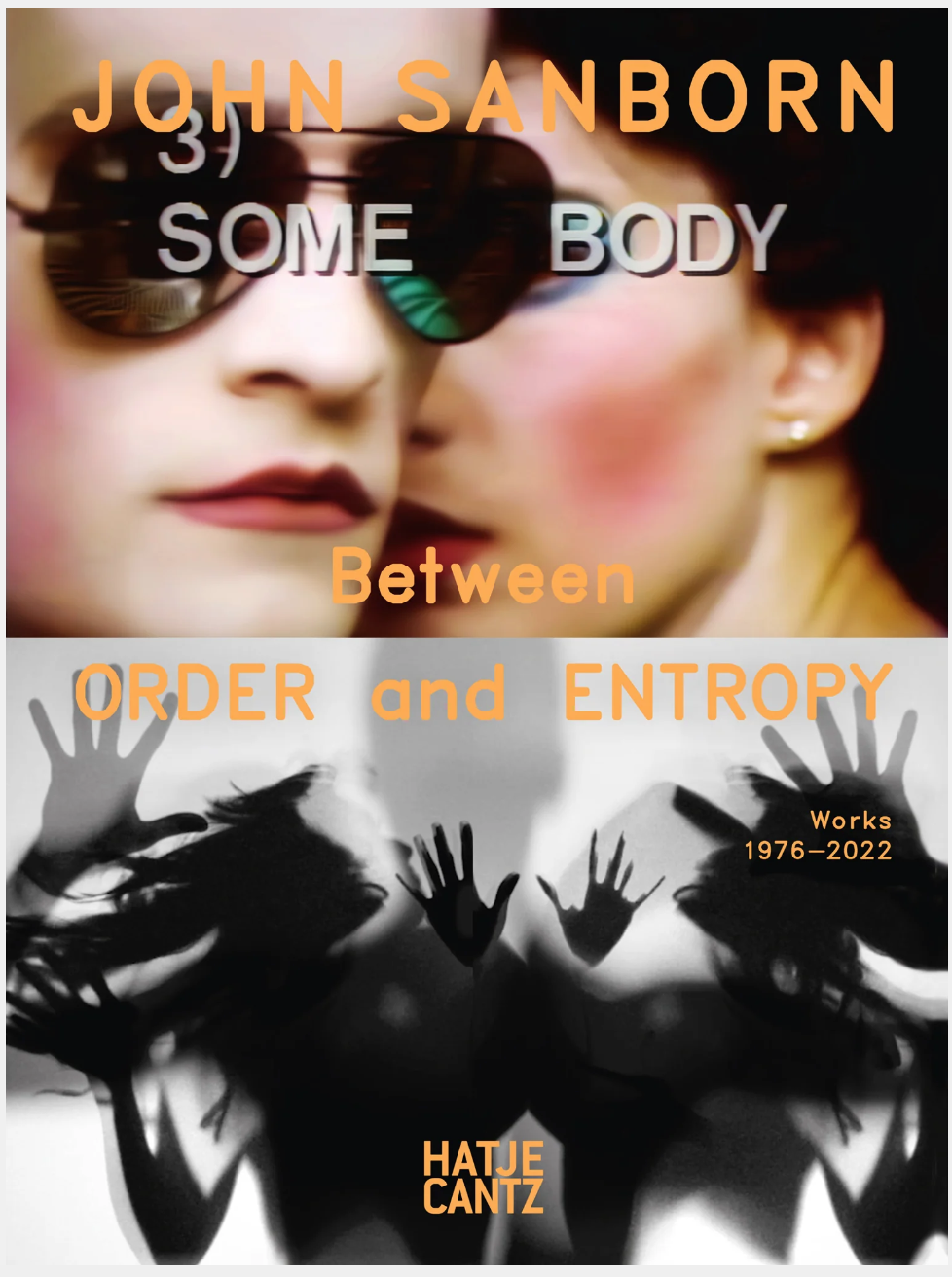
Der Meister vieler Klassen Kaum ein anderer Künstler, der mit Medien arbeitet, kann von sich behaupten, in so vielen visuellen Territorien Fuß gefasst zu haben wie John Sanborn: Sein Werk reicht von den Anfängen der experimentellen Videokunst über MTV-Musikvideos bis hin zu interaktiver Kunst und digitaler Medienkunst. Dabei war John Sanborn nicht nur Berater der ersten Stunde von Apple und Adobe – sondern vor allem der prominenteste Protagonist der amerikanischen Videokunstszene der 1970er- und 1980er-Jahre und maßgeblich am Beginn der digitalen Bildrevolution in Kalifornien beteiligt. Diese erste umfassende Künstler-Monografie zeigt Arbeiten aus mehr als vier Jahrzehnten, in denen sich der Künstler der Erforschung von Klang, Musik und kultureller Identität gewidmet hat. Essays zahlreicher Videokunstexpert:innen, Erinnerungen von Weggefährt:innen und ein Gespräch zwischen Sanborn und Medienkünstlerin Dara Birnbaum loteten das Spannungsfeld zwischen Massenmedien und Kunstwelt aus. Sanborn selbst zeichnet den einzigartigen Bogen seiner Medienkarriere nach und spricht über eine Reise, die ihn von Museen und alternativen Räumen zu Fernsehsendern nach Hollywood und ins Silicon Valley führte, bevor er in die Kunstwelt zurückkehrte. JOHN SANBORN (*1954, Huntington, New York) gehört zu den wichtigsten Vertretern der zweiten Generation der amerikanischen Videokunst, dessen Karriere sich von der experimentellen Videokunst in den 1970er-Jahren über die Hochzeit der MTV Musikvideos, bis zur digitalen Medienkunst von heute erstreckt. Zu den jüngsten Projekten gehören Live-Video-/Theater-Performances von God in 3 Persons, eine Zusammenarbeit mit The Residents, im MoMA, New York (2020). Sanborn lebt und arbeitet in Berkeley, Kalifornien. Das erste Standardwerk über den wichtigsten Vertreter amerikanischer VideokunstEine faszinierende Collage von Werken aus vier JahrzehntenMit über 520 farbigen Abbildungen

Was wir mit den Bannern zu ZKM-Ausstellungen machen? Ganz einfach: wir lassen sie weiterleben – als Fahrradtaschen. In Kooperation mit COBAGS entstand so die auf 44 Exemplare limitierte Sonder-Edition „Color Blocks“: Umhänge- und Fahrradtasche in einem. Mit ihrer Click-and-Go-Schienenlösung lassen sich die Taschen einfach und ohne zusätzliche Installation am Fahrrad-Gepäckträger befestigen. Und damit Sie die wichtigen Dinge des Alltags immer griffbereit haben, sind die ZKM-Fahrradtaschen mit einem Innenfach ausgestattet. Material aus digital bedruckten, upgecycelten WerbebannernWasserdicht durch eingenähtes Inlay KlettverschlussInnentascheDrei TrägervariantenGriffe und Nähte aus recyceltem PP (5)Maße: H 38 cm | T 16 cm | B 29 cmVolumen: 9 – 14 LiterGurtlänge: 60 – 130 cm PflegehinweisDie Tasche ist feucht abwischbar. Feuchtigkeit einfach ausschlagen und Lufttrocknen lassen.

Schützt dich vor Sonne und Regen, nur nicht vor Datenstürmen Robust, stilvoll, mit ZKM-Branding.Eigenschaften:Robuste KonstruktionZKM-BrandingErgonomischer Griff82, 5 cmDurchmesser 105 cm